
Find a Dinwiddie Property Owner
A good owner search moves from clue to record. Start with an address or a name. Vision, the county assessment database, answers searches by owner name, map number, and street name. The result is an owner-of-record lead, not final proof. The Circuit Clerk's deed index then supplies the recorded instrument and its legal description.
- Search Vision with the street name, property map number, or known owner name.
- Write down the parcel number and compare the situs and mailing clues without treating them as interchangeable.
- Search the latest deed through the Circuit Clerk’s grantor-grantee records and read the parties and legal description.
- If a company holds title, search its exact legal name in the Virginia SCC Clerk’s Information System.
- For an estate transfer, look for wills, fiduciary records, executor deeds, or a court order that explains the conveyance.
Dinwiddie’s Assessor Starts the Owner Search
The Commissioner of the Revenue runs the Vision system. It searches by owner name, property map number, or street name, which makes it the quickest route to an assessment owner and parcel. Dinwiddie notes that sales update daily. That is not a promise that the owner field changes daily too, so avoid counting on any fixed refresh delay. Parcel card labels and timing vary.
When a transfer looks recent, start with the deed. Write down its recording information and compare it with the assessment. The latest recorded deed is usually the stronger evidence of a new conveyance, while the assessment roll remains a useful index to the parcel and its tax value. Rural Dinwiddie has plenty of similar road names. Keep the same map number in both systems. That habit keeps nearby tracts from blurring together. The Vision assessment site displays the county's current landing information for property searches.
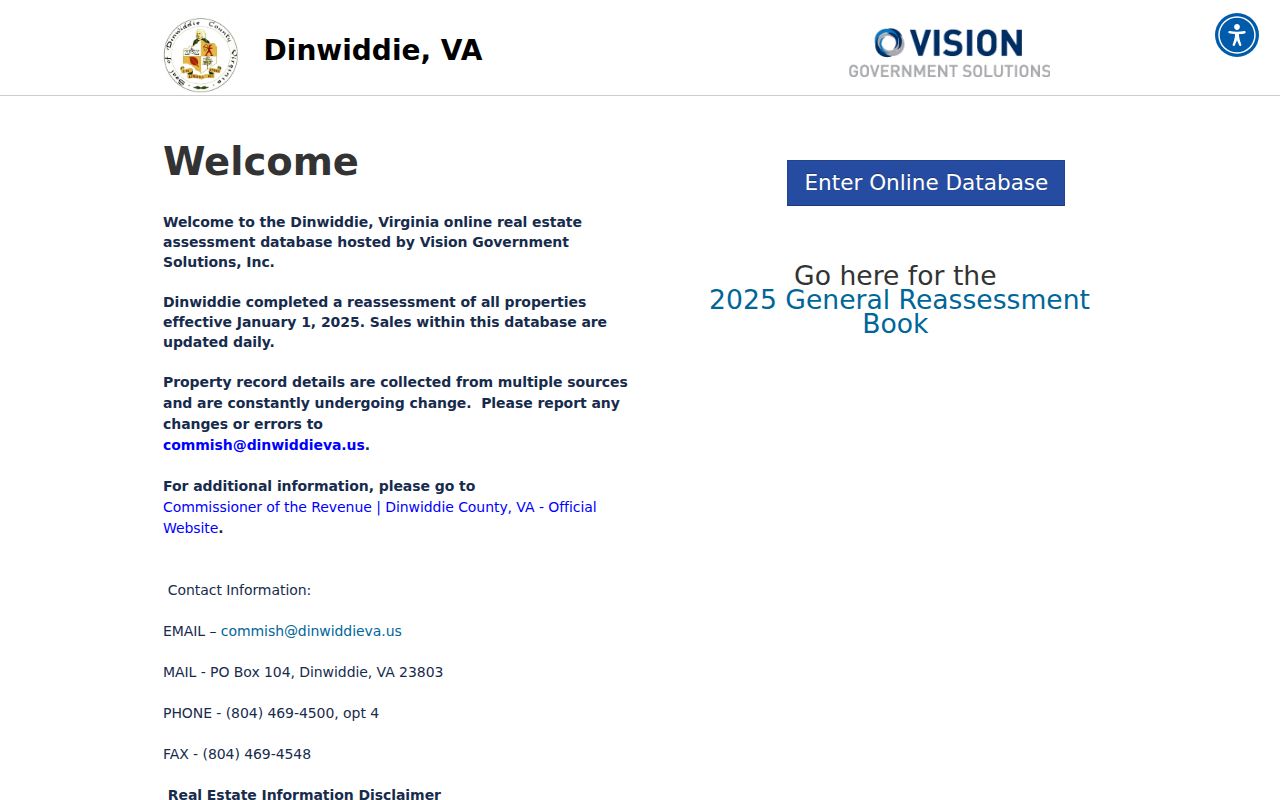
The official Vision entry screen lists its notices and search choices. Open a parcel card to see its fields.
Dinwiddie Owner, Mailing, and Situs Clues
A situs address is the place of the property. A mailing address is where the tax bill goes. The owner name on the roll shows the party indexed to that parcel for tax purposes. All three fields can differ on a rural tract, an absentee holding, a company, or an estate. A mailing address never proves where someone lives.
Dinwiddie mixes rural roads and historic farms with the incorporated town of McKenney. The county Treasurer's street-name search returns a selection list when the number is left off. That list helps sort nearby tax parcels. Carry each GPIN into Vision and GIS from there. Then match the legal description in the deed before treating two records as the same land.
- Owner of record
- The name associated with the parcel in a particular official record, such as the assessment roll or deed.
- Grantee
- The party receiving an interest in a recorded conveyance.
- Situs address
- The location associated with land or improvements.
- Mailing address
- The address for owner correspondence, which can be elsewhere.
When a Dinwiddie Parcel Names an Entity
A Dinwiddie deed or assessment may name an LLC, corporation, trustee, or executor. Run the exact entity name through the Virginia SCC Clerk's Information System. It returns state business records. Registered agents and filing history come with it. None of that proves the company still owns the parcel. Only the deed supplies the conveyance evidence.
Estate ownership takes another step. Dinwiddie wills, fiduciary records, executor deeds, chancery causes, and later conveyances can explain how land passed after death. Will-index start years vary across the Clerk's coverage. Confirm the relevant range when researching an older estate. The Virginia SCC Clerk's Information System is the official state entity source.
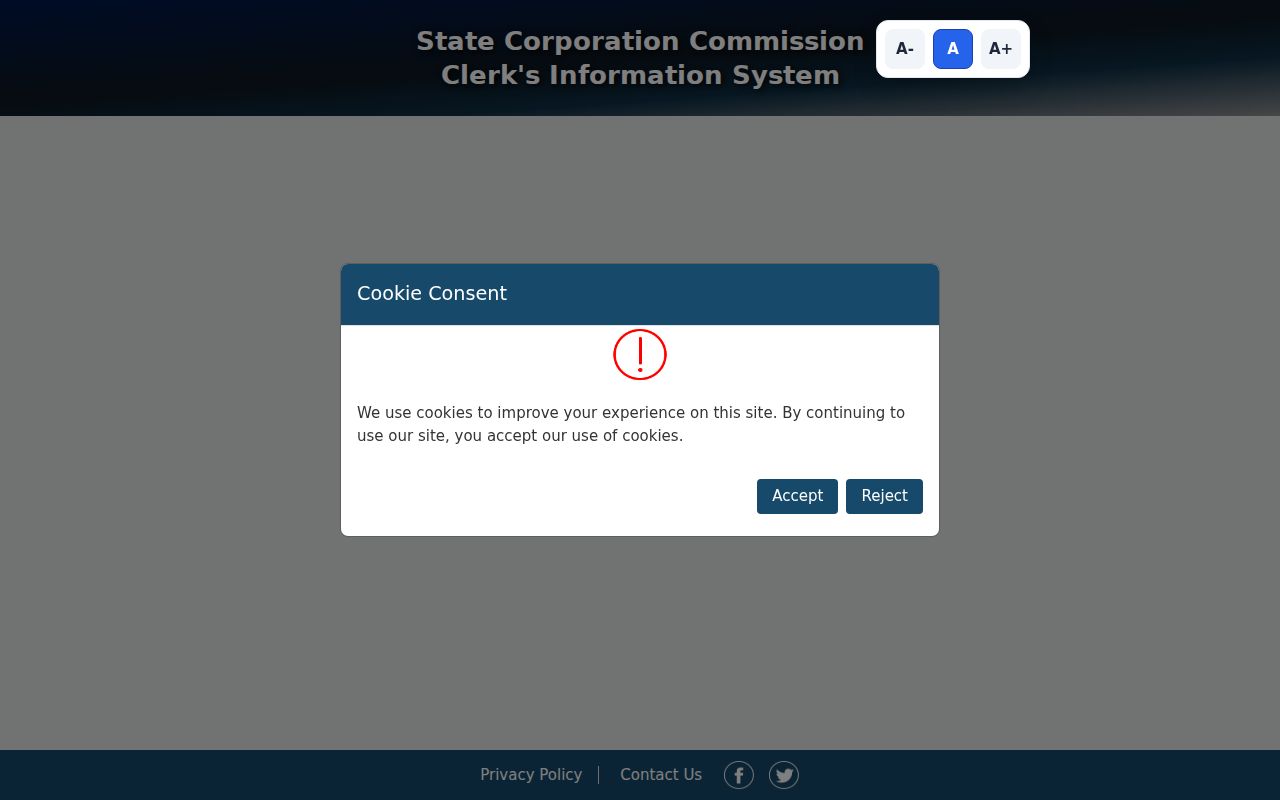
Resolve the name through the entity search first. Then return to the Dinwiddie Clerk's land index for the parcel's title records.
Dinwiddie Owner Information by Record
Ownership clues surface in several Dinwiddie records. Compare what each source can establish before trusting any single name as current.
| Source | Owner Info It Gives | Access |
|---|---|---|
| Vision assessment | Owner name and parcel search context on the tax roll | Public online database |
| Circuit Clerk deed index | Parties and land instruments that were recorded | SRA index/image rules, counter, mail, or email |
| Virginia SCC CIS | Business entity name, registered agent, and filing history | State system; exact controls may vary |
| County GIS | Parcel geometry and map context | Viewer and GIS Data Hub; reference use only |
A tax roll and a deed both name parties to a property record. Neither tells you who occupies the building. Virginia's Address Confidentiality Program can give an eligible person a designated mailing address, and the actual address receives statutory protection. A mismatch is not proof of anything improper.
A McKenney Owner Is Still in County Records
McKenney is Dinwiddie County's one incorporated town. The county still keeps the assessment and deed records. No separate town assessor or town real-estate index exists. The town can impose its own tax within the corporate limits, so a complete local balance check may need town information alongside the county Treasurer ticket.
The charter's boundary description points to a survey plat recorded with the Circuit Court Clerk. A McKenney postal label alone proves little. Check the parcel number next. Then weigh the charter boundary, the recorded plat, and the tax jurisdiction together. That matters when a purchase or tax question turns on the town line.
Use VADeed Alert for Dinwiddie Changes
Dinwiddie County offers a free VADeed Alert service. It watches for local recordings matching a name or a Tax Map/Parcel ID. An owner can use it to learn of a new deed or other filing quickly. The alert is only a signal, though. It does not stop a recording, and it cannot judge whether an instrument is valid. An alert may surprise you. Pull the document through the Clerk's office in that case. Read its parties and legal description closely. The Clerk or a lawyer can then advise on the right steps.
The county's VADeed Alert page explains signup and how to respond to a notice.
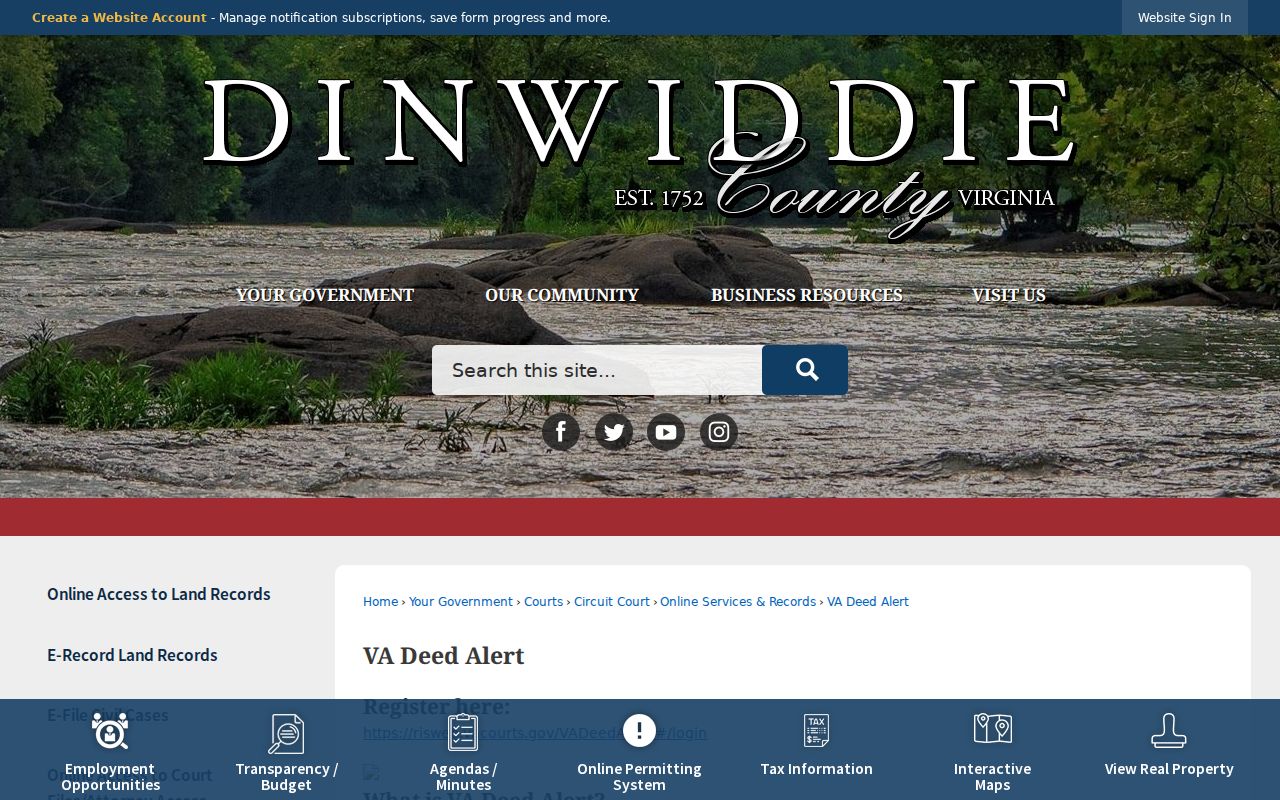
An alert builds awareness, but the land record itself, plus advice from the right professional, still drives any response.
What an Owner Search Cannot Prove
A Dinwiddie owner search has clear limits. It can find a name in the assessment roll or a deed. What it cannot show is who actually lives at an address. Nor can it promise that every recorded interest is accounted for. An estate file may hold further documents. A parcel line may not follow the fence. Virginia privacy protections still shield some records, and court restrictions apply to others.
Lawful use. Use owner information for property diligence, record correction, or civic research. Do not use it to target, threaten, stalk, or harass a person.